
Learning to operate a rifle safely and confidently is not something that happens instantly. It requires structured instruction, repetition, and a clear understanding of how the firearm functions. The AR-15 Fundamentals USCCA training approach is built around exactly that idea, helping beginners progress from basic familiarity to controlled, responsible handling in a safe environment.
This training is closely associated with the USCCA, a widely recognised organisation focused on civilian firearm education and self-defence preparation. Their programs are designed to reduce confusion for beginners and replace it with structured learning that prioritises safety at every step.
One of the first and most important stages in this journey is USCCA Getting to Know Your AR-15, which introduces learners to the platform before they ever step onto a live-fire range.
Understanding the AR-15 Platform
The AR-15 is one of the most popular rifle systems in the United States, largely due to its modular design and adaptability. However, for beginners, this modularity can also feel overwhelming at first.
The fundamentals training begins by breaking the rifle down into simple, understandable parts. Students are introduced to the upper receiver, lower receiver, bolt carrier group, charging system, and magazine interface. Instead of focusing on technical complexity, instructors simplify each component so learners understand its role in safe operation.
During USCCA Getting to Know Your AR-15, students are encouraged to physically inspect the rifle under supervision. This tactile learning process is important because it replaces uncertainty with familiarity. Many beginners are initially hesitant, but structured guidance helps them become comfortable handling the firearm safely.
The goal at this stage is not shooting ability. It is awareness, confidence, and safe manipulation.
Building a Strong Safety Foundation
Before any live-fire activity takes place, safety is established as the most important principle of all training. This is a core philosophy of the USCCA and is reinforced throughout every stage of instruction.
Students are repeatedly taught essential safety rules, including treating every firearm as loaded, maintaining muzzle awareness, keeping fingers off the trigger until ready, and ensuring full awareness of the target and its surroundings.
What makes this stage effective is repetition rather than memorisation. Instructors correct behaviour in real time, ensuring that safe handling becomes instinctive rather than forced. Even small mistakes are addressed immediately so that learners build strong habits from the beginning.
This safety-first mindset is what allows beginners to progress confidently into live-fire training later.
Transitioning into Outdoor Range Training
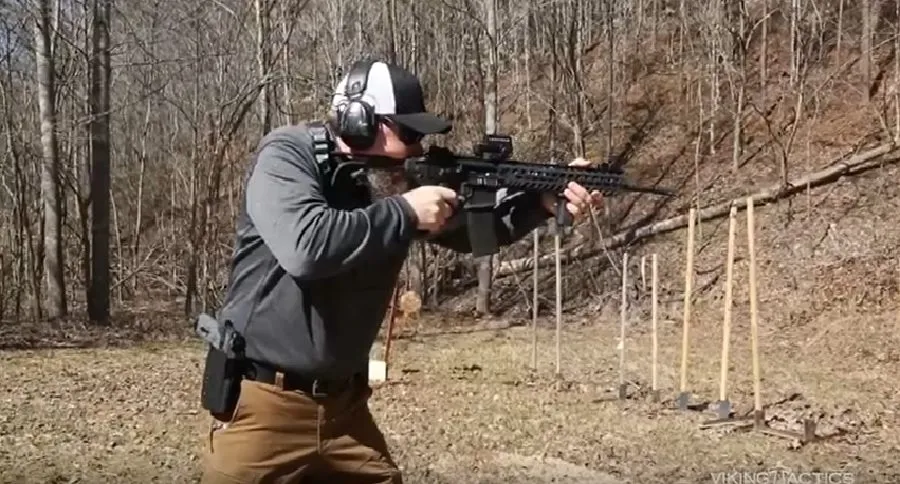
Once students demonstrate basic familiarity with handling and safety, they move into outdoor range sessions. This is where AR-15 Outdoor Range Training USCCA becomes practical and hands-on.
Outdoor environments introduce real-world conditions that cannot be replicated in a classroom. Factors such as wind, distance, lighting changes, and environmental noise all influence performance. Learning to shoot under these conditions helps students adapt more effectively.
At this stage, instructors maintain a slow and controlled pace. Beginners typically start with single-shot exercises, focusing on stability, breathing control, and sight alignment. The emphasis is not on speed but on accuracy and consistency.
As students progress, they may be introduced to basic target transitions and controlled follow-up shots. However, everything is carefully supervised to ensure safety and comfort remain the priority.
Core Skills Developed During Training
The AR-15 Fundamentals USCCA program is designed to build essential shooting skills gradually. These are not advanced tactical techniques but foundational abilities that every responsible rifle user should understand.
One of the most important skills developed is trigger control. Beginners learn how pressure affects accuracy and how smooth, consistent trigger presses lead to better shot placement. Alongside this, sight alignment and sight picture training help improve precision.
Breathing control is another key focus. Many new shooters are surprised to learn how much breathing affects stability. Instructors teach simple techniques to maintain composure before and during firing.
Recoil management is also introduced early. While the AR-15 platform is relatively manageable compared to larger rifles, proper stance and grip still play a major role in controlling movement between shots.
Over time, students also begin learning how to identify and respond to minor malfunctions safely. This builds confidence and reduces anxiety in case of unexpected interruptions during practice.
Why Structured Learning Matters
For many beginners, the temptation to learn independently can be strong. However, structured training provides a much safer and more effective learning environment.
Programs like USCCA Getting to Know Your AR-15 are designed to eliminate guesswork. Instead of relying on trial and error, students receive direct instruction from experienced trainers who can identify and correct mistakes immediately.
This prevents the development of poor habits such as incorrect grip, improper stance, or unsafe handling practices. Once these habits form, they are difficult to correct later, which is why early instruction is so valuable.
Structured learning also reduces anxiety. Many first-time shooters feel nervous handling a firearm, but guided instruction helps replace fear with understanding and control.
What a Typical Training Experience Looks Like
A standard session begins with a classroom-based safety briefing. This includes an overview of the AR-15 platform, handling expectations, and an explanation of range rules.
Students then move into dry-fire exercises where they practice handling without live ammunition. This stage helps reinforce safe manipulation and builds comfort before live-fire begins.
Once ready, participants transition to the outdoor range. Here, they begin with controlled shooting drills under instructor supervision. Feedback is constant, and adjustments are made in real time to improve technique.
The session concludes with evaluation and review, allowing students to understand their strengths and areas for improvement. The pace is always adjusted to match the group’s experience level, ensuring that no one feels rushed.
Final Thoughts
The AR-15 Fundamentals USCCA training pathway, including USCCA Getting to Know Your AR-15, provides beginners with a structured and safe introduction to rifle handling. It focuses on building confidence through understanding rather than rushing into advanced techniques.
By combining classroom instruction with outdoor range experience, students gain both theoretical knowledge and practical skills. Training associated with the USCCA ensures that every stage of learning is guided by strong safety principles and professional instruction.
For anyone new to rifles, this structured approach creates a strong foundation that supports long-term growth, responsible handling, and consistent improvement over time.